Placemaking
Publix placemaking
The anchor landlord experience
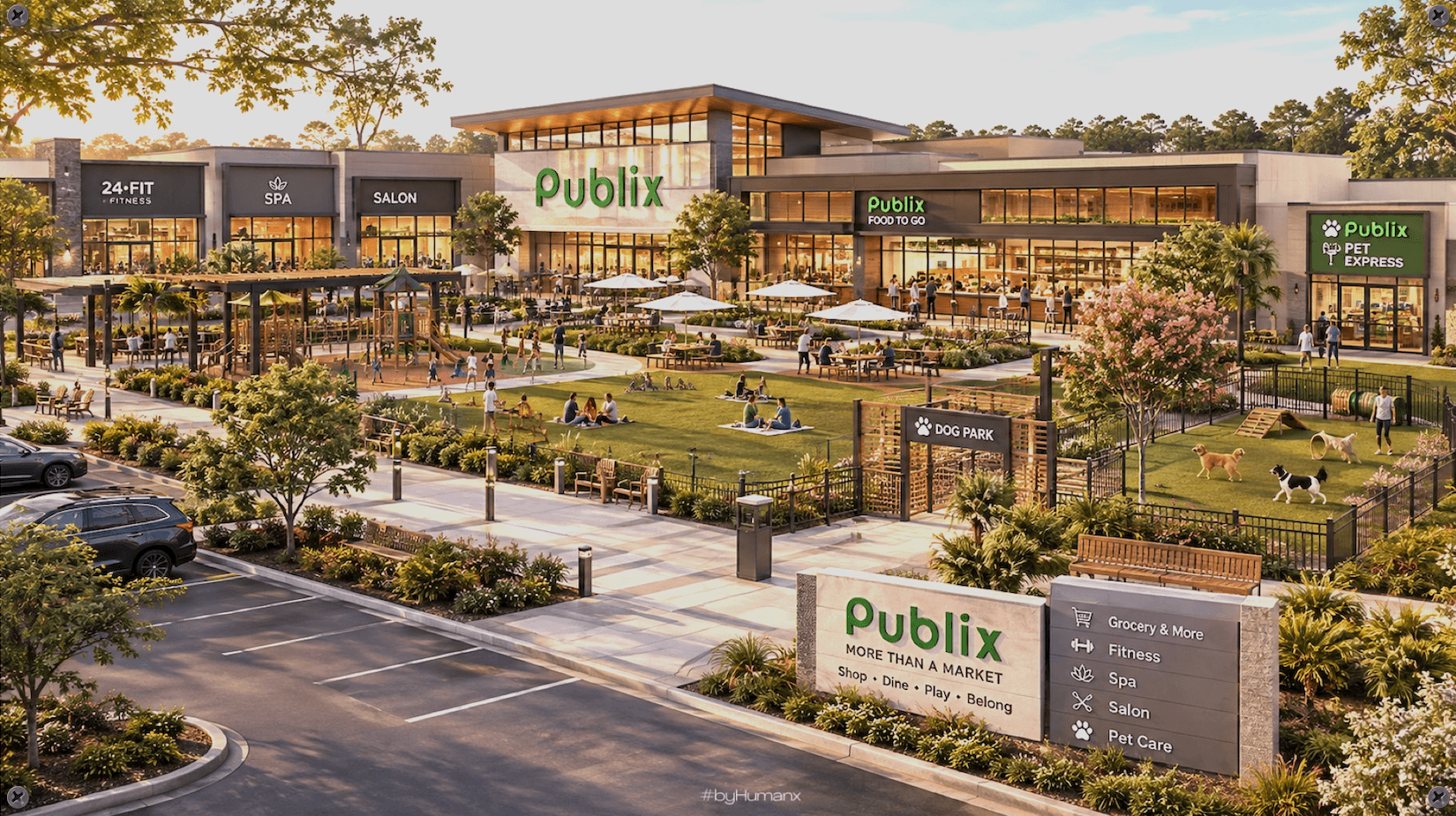
Since 2023, Publix has acquired several shopping centers in Boca Raton, Kendall, Boynton Beach, Fort Lauderdale, and North Miami. A December 2025 report estimated the total expenditure at just under $430 million. Rather than reflecting a broad commercial real estate investment, this activity appears to represent a strategic transition from tenant to owner—particularly in Florida locations where Publix already serves as the anchor tenant.
Ownership allows Publix to secure key locations, mitigate risks associated with lease renewals and rent increases, and exert greater influence over maintenance and tenant composition. Additionally, the company can generate rental income from other businesses within the plaza. Because grocery stores attract frequent, necessity-driven traffic, they serve as effective anchors for retail and service providers. Although Publix has not publicly confirmed these motives, the rationale is strategically sound.
The pattern indicates that Publix is selectively converting existing anchor sites into long-term real estate assets—a move distinct from general expansion or speculative acquisition. These purchases also enhance the company’s control over specific retail environments.
Is Publix creating a place, not merely owning one?
Acquiring a shopping center provides Publix with more than geographic control; it may enable the company to shape the surrounding environment. This potential is not documented in a formal plan but illustrates the possibilities of ownership.
Consider a center where a redesigned portion of the parking area becomes a welcoming public space featuring shade, seating, greenery, a small children’s play area, and a separate pet-friendly zone. A Publix deli or café could open onto this space, facilitating outdoor dining. An adjacent pet section could serve dog owners while remaining accessible to general shoppers.
Complementary tenants—such as fitness centers, salons, spas, vision care, and other neighborhood-appropriate services—could provide additional incentives for visits beyond routine grocery shopping. These occupants may generate foot traffic throughout the day; such lifestyle synergy benefits all tenants and may enable Publix, as landlord, to command a premium. However, this design must serve local residents rather than merely extend dwell time or increase expenditure. Implementation requires accessible pathways, comfortable seating, shade, safe crossings, practical parking, and mitigation of noise, heat, and maintenance. Play areas or dog zones demand clearly defined boundaries and consistent upkeep, while outdoor food service must align with site conditions, and existing in-store food-service operations.
The opportunity is significant, as is the responsibility. A plaza does not automatically become a community destination through tenant diversification or landscaping alone. Success depends on utility, hospitality, diligent maintenance, and patient capital to realize long-term value. Publix’s ownership of a center may facilitate this broader vision; whether it will pursue this direction remains uncertain.
Nevertheless, the broader trend involves treating the shopping center as an ecosystem: a grocery store, functional services, and shared outdoor space operating in concert. If Publix can align these elements with daily needs while providing a welcoming environment for residents, its centers may evolve beyond transactional stops into integral components of community life.